
Glassware is fragile, so attractive product design is only part of a successful wholesale project. The packaging must also protect the products during handling, warehousing, container loading, international transportation and final delivery.
For retailers, importers and e-commerce sellers, packaging damage can lead to customer complaints, replacement costs, poor reviews and inventory loss. A suitable drop-testing and breakage-control process helps identify packaging weaknesses before mass shipment.
During transportation, cartons may experience drops, vibration, compression, impacts and repeated handling. Even when the outer carton appears undamaged, glass products inside may crack, chip or collide with each other.
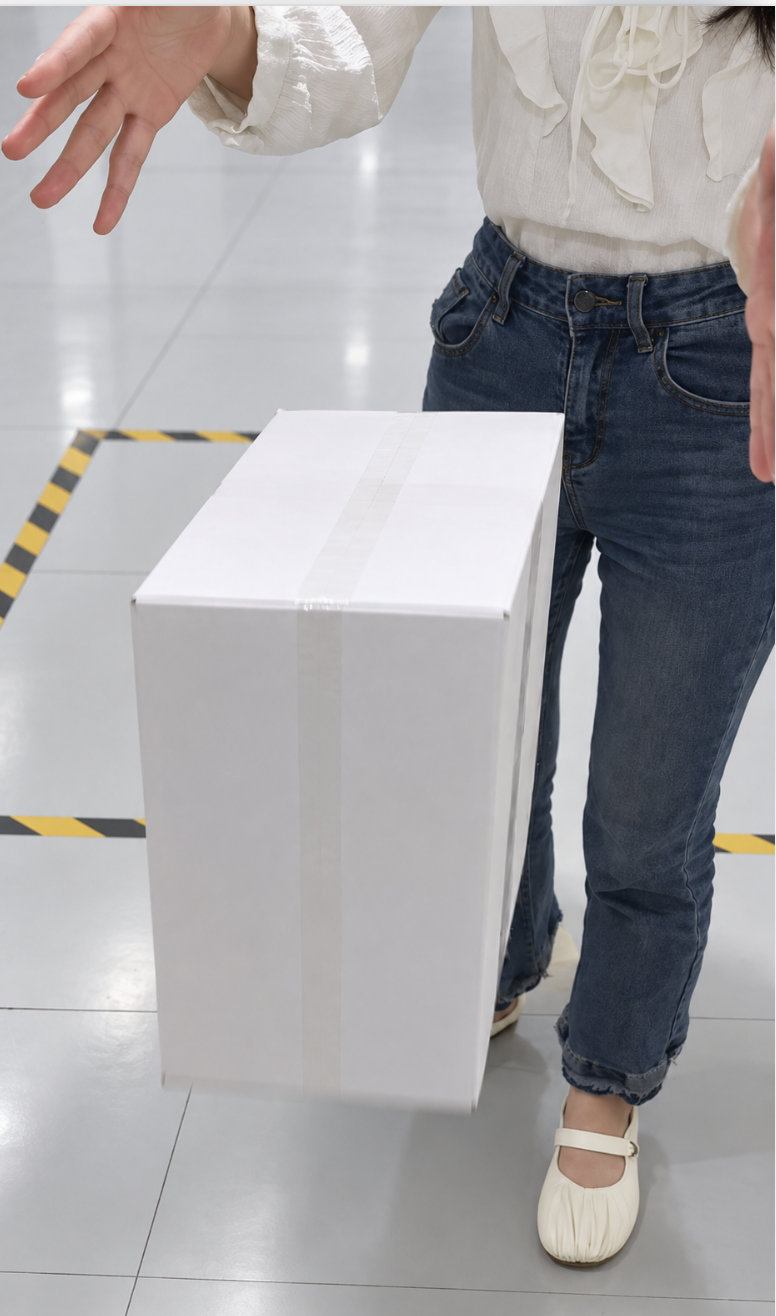
Drop testing evaluates the complete packaged product rather than the glass item alone. The purpose is to determine whether the product, inner packaging and outer carton can work together to withstand expected distribution hazards.
Testing conditions should be selected according to factors such as:
Product size and weight
Number of pieces in each carton
Retail box or mail-order packaging
Parcel, pallet or container transportation
Destination market
Customer or retailer testing requirements
Drop heights and test sequences are not the same for every order. They may vary according to the packaged-product weight, dimensions and applicable testing procedure.
Before testing, the glassware should be packed in the same way as the final production order. This includes the actual retail box, dividers, protective materials, master carton and sealing method.
A typical evaluation may include impacts on:
The bottom of the carton
The top of the carton
The longest and shortest sides
Corners
Edges
After the test, the carton is opened and the products are inspected. The inspection checks for broken glass, cracks, chipped rims, damaged decorations, loose components and packaging deformation.
For projects that require formal transport testing, buyers may request testing according to an appropriate ISTA procedure or another agreed standard. Drop testing may also be combined with vibration and compression testing to provide a more complete evaluation of transportation performance.
Individual glass pieces should not come into direct contact with each other. Cardboard dividers, molded pulp, foam, paper sleeves or other protective structures can be used to separate the products.
The most suitable material depends on the product shape, order quantity, target cost and environmental requirements.
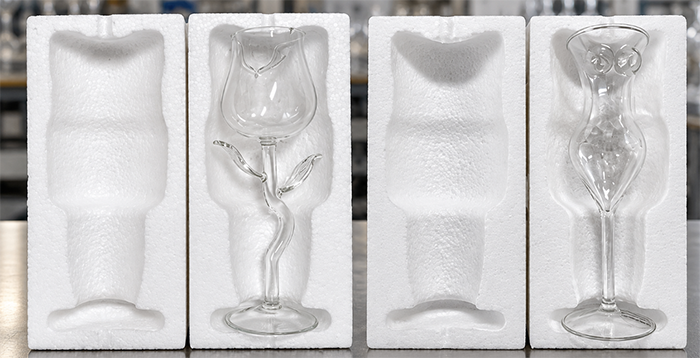
The rim, handle, stem and base are often the most vulnerable parts of a glass product.
Wine glasses require support around the bowl, stem and base. Glass mugs need additional protection around the handle. Products with lids, straws or accessories should have separate positions to prevent movement and impact.
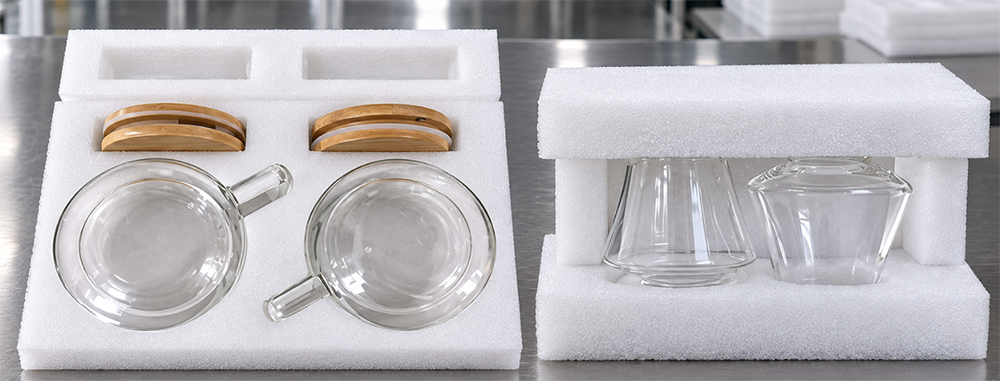
Too much empty space allows the products to move inside the box. Too little space may transfer external pressure directly to the glass.
A suitable packaging structure should hold every item securely while maintaining enough cushioning between the glass and the outer carton.
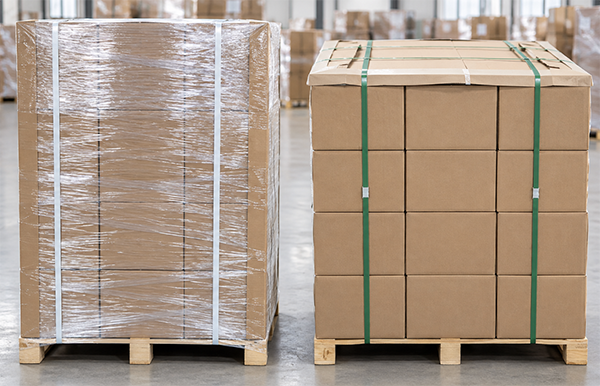
The outer carton must be suitable for the total packed weight and transportation method. Carton dimensions should match the inner packaging closely.
For heavier or more fragile products, stronger corrugated cartons, reinforced corners or double-box packaging may be considered. UPS also recommends a two-box method for certain fragile goods.
Cartons should be closed with suitable packaging tape and a consistent sealing method. Weak or incomplete sealing can cause the carton to open or lose strength during handling.
Drop testing alone cannot prevent every problem. Breakage control should continue throughout production, packing and shipment.
Important quality-control steps include:
Inspecting glass rims, bodies, bases and handles
Checking for cracks, chips and unstable bottoms
Confirming product dimensions and weight
Verifying the position of dividers and protective materials
Checking retail boxes and export cartons
Confirming carton quantity and gross weight
Performing packing checks during production
Conducting final random inspection before shipment
Recording packaging specifications for repeat orders
If the product, packaging material, carton dimensions or packing method changes, the packaged product should be evaluated again. ISTA also recommends retesting when changes may affect packaging performance.
Packaging requirements depend on how the order will be distributed.
Products shipped directly to consumers may experience more individual handling and parcel drops. E-commerce packaging therefore often requires stronger individual protection and additional testing.
Bulk shipments transported on pallets may reduce some parcel-handling risks, but the cartons must still withstand stacking pressure, container vibration and warehouse handling.
Before developing the packaging, buyers should tell the supplier whether the products will be sold through Amazon, supermarkets, gift shops, hospitality channels or other distribution systems.
AIKEYI supports custom packaging development for wholesale and private-label glassware projects.
Depending on the product and buyer’s requirements, available options may include:
Individual protective wrapping
Cardboard dividers
Molded pulp or foam protection
Brown boxes
Color boxes and gift packaging
Inner and master cartons
Barcode and private-label packaging
Customized carton markings
Drop-test evaluation
Third-party testing upon request
Our team reviews the glass shape, vulnerable areas, packing quantity and transportation requirements before recommending a packaging solution.
No packaging can guarantee zero breakage under every transportation condition. However, suitable packaging design, testing and production control can significantly reduce avoidable damage.
The test conditions should be based on the packaged-product weight, dimensions, distribution method and customer requirements. A single drop height should not be applied to every glassware package.
Yes. We can discuss retail boxes, mail-order protection, barcode requirements and transport packaging according to the product and the buyer’s distribution plan.
Retesting should be considered when the glass design, product weight, packing quantity, inner protection, carton material, carton dimensions or transportation method changes.
Effective breakage control begins before mass production. Selecting the right packaging materials, checking vulnerable product areas and testing the complete package can reduce transportation risks and improve the customer experience.
If you are developing a new glassware collection, send AIKEYI your product design, packing quantity, sales channel and delivery market. Our team can help develop a suitable packaging solution for your wholesale or private-label project.
Website: https://www.aikehomeware.com
Email: info@aikehomeware.com